Skip to content
Acoustic Pixel
Tier 03 · £60K to £100K+

A cinema room you stop noticing.

High-performance dedicated cinema rooms across the UK, from £60,000.

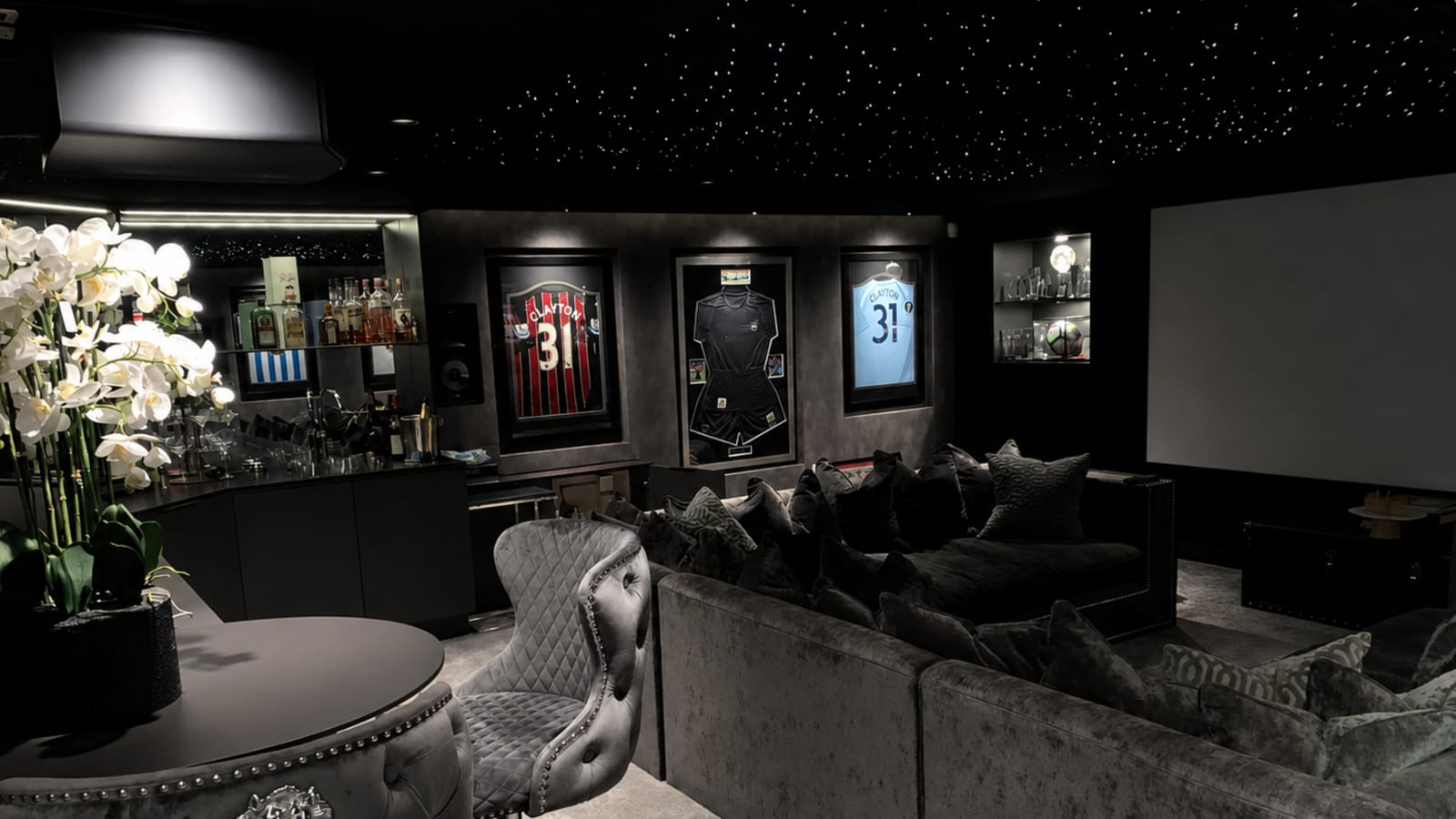
High-performance cinema lounge in black and charcoal with a starlight ceiling, a bar, framed football shirts and deep velvet seating

Engineered, not just expensive.

High-performance is an outcome, not a budget. A £60,000 cinema with the right decisions outperforms a £100,000 cinema with the wrong ones.

The work is slower. Most projects start at RIBA Stage 2, alongside the architect.

Where high-performance fits.

Three common project situations at this tier. Most buyers reach this page already knowing, and the page confirms the decision.

Lower ground floor
Situation 01

A basement cinema inside a wider home refurbishment.

Substantial works underway. The cinema sits inside a wider project that may share services with a gym, plant room or family lounge. Architect involved, interior designer with views.

The room becomes a defining space in the house, not an add-on.

Dedicated cinema
Situation 02

A reference room for someone who can hear the difference.

A buyer who arrived at this tier on their own. Owns the films, knows the brands, reads the calibration reports.

A long conversation about the project, not a quick quote.

New build & major refurb
Situation 03

A cinema designed in from the architect's drawings.

A country build, a townhouse refurbishment, or an architect-led new build. We're brought in at the start, so walls can still be moved and ceilings designed for what goes inside them. The cinema costs less to build correctly here than to retrofit at the same specification later.

What's included.

Six components. Designed around the room. Engineered to reference standards.

Reference-grade immersive sound

7.1.4 to 9.1.4+ Dolby Atmos, multiple subwoofers

4K laser projection

Acoustically transparent screen, anamorphic optional

Engineered acoustic treatment

Modelled, built, measured

Lighting and starlight ceiling

Full Lutron scene design, optional fibre-optic ceiling

Bespoke seating

Two tiered rows, designed to the room

Integrated control

One press, the room responds

Reference brands include M&K Sound, Lyngdorf, JVC, Stewart Filmscreen, Amina, Sonance, Lutron, Control4 and Crestron. The right brand for the room is part of the design conversation, not a default.

Not in this tier

Anything compromised. If a decision is wrong for the room, we won't recommend it just because the budget allows it. Structural works, interior design fees and decoration sit outside scope.

Investment.

Reference projects don't have a typical cost. Two project shapes, and most projects sit between them.

Reference room
~£75K
£60K to £100K

A strong reference build: 7.1.4 Atmos, JVC laser, full acoustic engineering, bespoke seating, integrated control.

No-compromise suite
~£195K
£150K to £200K+

9.1.4 Atmos with multiple subwoofers, anamorphic lensing, structural isolation, full architectural integration.

Bands cover the cinema as a system. Structural works typically add £15K to £80K. Interior design fees and decoration sit outside scope.

Get a precise figure with the cost calculator →

What reference performance feels like.

Mid-range cinemas can be excellent. Reference cinemas are something else.

01. The same sound in every seat

Multiple subwoofers, measured and phased. The film sounds the same wherever you sit.

02. Dialogue you don't have to lean in for

Noise floor engineered below 30 dBA. Dialogue clarity that doesn't need subtitles.

03. Speakers you stop locating

Timing aligned to commercial cinema tolerance. The sound field becomes continuous.

04. An image that's the same image everywhere

Uniformity correction at calibration, measured at multiple points. No corners that fall dark.

05. A room you stop thinking about

Treatment, lighting and control sequenced so the room disappears into the film.

How a project runs.

Three to six months from design to handover. New builds align with the construction programme.

  1. 01

    Private consultation

  2. 02

    Acoustic design

  3. 03

    Fixed quote

  4. 04

    Installation

  5. 05

    Calibration and handover

Why use us at this tier.

THX-trained cinema designers

The discipline used by commercial cinema engineers, applied to reference home rooms.

Architect and designer fluent

RIBA-stage drawings, structural coordination, agreed finishes. We join at Stage 2.

In-house engineering, in-house calibration

Nothing subcontracted. We sign every room off ourselves.

Authorised across the reference brands

M&K, Lyngdorf, JVC, Lutron, Control4 and the rest of the names that matter.

A recent high-performance project.

Surrey

9-seat high-performance cinema

M&K Sound reference monitors, JVC laser projection, full acoustic engineering and a starlight ceiling.

For architects and interior designers

Integrated from RIBA Stage 2.

A reference cinema retrofitted into a finished room is always more expensive and always more compromised than one designed into the building from the start. Joining at design stage saves the client money and produces a measurably better room.

We work in architect and designer language. RIBA-stage drawings, reflected ceiling plans, lighting schedules cross-referenced to scenes. We attend design team meetings. We don't turn up at second fix asking where the projector goes.

When high-performance isn't right.

Step down

Mid-Range Bespoke Cinemas

Not every dedicated cinema needs the reference tier. Step down if your room is dedicated but doesn't justify reference-grade engineering, or your project is a retrofit into a finished room.

£25K to £50K →

FAQ.

How much does a luxury home cinema cost in the UK?
£60,000 to £150,000 for the system, with no-compromise projects extending beyond £200,000. Structural works, acoustic isolation, decoration and architect fees are separate. Reference projects don't have a typical cost in the way the lower tiers do, because the room and the brief drive the number rather than a specification list.
How long does it take to build?
Three to six months from design to handover. New builds align with the construction programme and can span twelve months or more from the initial brief, because the cinema is designed alongside the building rather than fitted into it afterwards.
Do I need a dedicated room?
Yes. The engineering decisions that define reference performance, acoustic isolation, treatment modelled to the room, seating geometry, controlled light, are not achievable in a multi-use space. If the room has to do two jobs, mid-range or a media wall is the honest answer.
Do you work with architects and interior designers?
Yes, and the majority of our high-performance projects involve one or both. We run a dedicated partner programme and routinely join from RIBA Stage 2, working in RIBA-stage drawings, reflected ceiling plans and lighting schedules cross-referenced to scenes.
Is a starlight ceiling worth it?
Often yes, occasionally no. It adds atmosphere no other lighting decision delivers. Skip it if the room has ceiling detail that competes, if it's daylit, or if the £6,000 to £20,000 is better spent elsewhere in the room.
What makes a cinema room reference-grade?
Five technical markers: even bass across every seat, modelled-and-measured treatment, speaker timing to commercial tolerance, calibrated image uniformity, and a noise floor low enough for reliable dialogue clarity. Not the price, and not the brand names.

Start a high-performance project.

High-performance projects begin with a conversation, not a quote. The fastest way to scope yours is to arrange a private consultation, at your home, the architect's studio, or our showroom. No obligation to proceed.