Skip to content
Acoustic Pixel
Residential · Smart Home Systems

Smart Home Systems.

One system for your whole home: lighting, heating, blinds, audio, security and access, controlled from a single interface. Designed, installed and rescued across the UK.

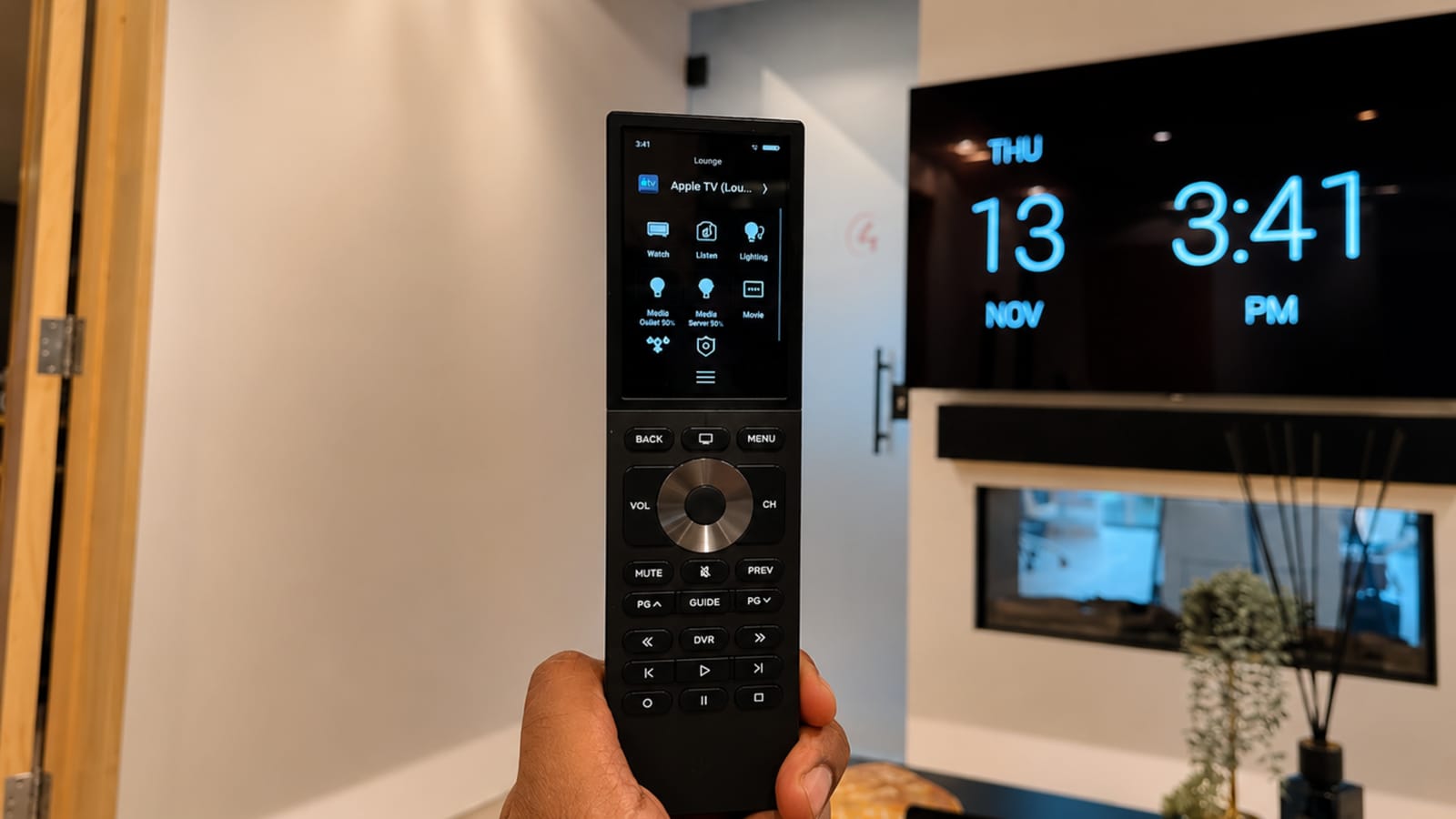
Most smart homes aren't smart. They're a drawer full of apps that don't talk to each other. We design integrated systems where one interface controls everything, every system works together, and the technology disappears into the way you live.

[ hero: single keypad in finished home, whole house implied ]
Brand thesis

One system, not seven apps.

The smart home industry sells devices. We design systems. A house full of individually smart devices (a smart thermostat here, smart bulbs there, a smart lock, a voice assistant) is still seven separate systems you manage with seven separate apps. More complicated than the house you started with, not less.

An integrated smart home works the other way. Lighting, heating, blinds, audio, security and access all run through one platform. One press of one button sets the whole house for the evening. The technology gets simpler to use as it gets more capable.

[ editorial: scene-controlled living space ]
Two routes through this cluster

Two ways to start.

Some clients want the whole house automated. Others want one system, lighting or heating, done properly. Both are good places to start.

Route One

A whole-home system.

An integrated home where everything works together. Choose between two tiers: Smart Home Starter covers the rooms that matter most; Smart Home Premium covers every room, every system.

Route Two

A single system, done properly.

Lighting or heating done properly, as standalone services or as the start of a system you expand later. Nothing installed now gets wasted.

Whole-home

Whole-home systems.

Two tiers. Start with key rooms and grow, or take on the full integration from day one.

Tier · Starter

Smart Home Starter

A focused system in the rooms that matter most, designed to expand over time.

  • Lighting and heating control in key rooms
  • Single app and wall-mounted keypad
  • Networking foundation built to expand
  • Voice control and automated scenes
Typical range £3,000 to £10,000+
Tier · Premium

Smart Home Premium

Whole-home automation: every room, every system, one interface. Built for new builds, major renovations, and high-end home automation projects.

  • Whole-home lighting, heating, blinds and shading
  • Multi-room audio and integrated home cinema
  • Security, CCTV and door access integration
  • Control from keypads, touchscreens, app or voice
Typical range £10,000 to £50,000+
Specialisms

Single systems, done properly.

Standalone services. Designed to expand into a full smart home later, without rework.

Specialism · Smart Lighting

Smart Lighting

A designed control layer over architectural lighting: scenes that shift the mood, an automatic lighting system following the day, whole house lighting control from one keypad.

  • Lighting design and circuit planning
  • Scene programming for every room
  • Keypad control replacing switch banks
  • Dimming and colour-temperature control
Typical range
£3,000 to £15,000
Platforms
Lutron · Rako · Loxone
Specialism · Smart Heating

Smart Heating

Multi-zone control: the right temperature in the right room at the right time, learning your routine, integrated with your existing boiler.

  • Multi-zone control: heat rooms independently
  • Boiler and underfloor integration
  • Schedules that follow your actual routine
  • Energy reporting and efficiency
Typical range
£2,000 to £8,000
Platforms
Boiler & underfloor integration
Retrofit · Integration · Rescue

We work with the system you already have.

Smart homes that don't behave as promised, devices that won't talk to each other, older home automation systems that feel left behind. These aren't failures of technology. They're almost always failures of smart home integration or system design.

Most can be saved. Three scenarios bring most of our retrofit work; we recognise all three.

01

Your existing devices, brought together.

You've collected smart home devices over time: a Hive thermostat, Hue bulbs, Ring cameras, Sonos speakers. Each does its job. None of them act as one. We know which devices integrate cleanly into a professional platform, which need replacing, and which work best left alone.

02

When your smart home doesn't behave the way it should.

Inconsistent scenes. Dropped connections. Automations firing at the wrong time. Problems like these almost always trace back to networking or programming, both fixable, neither obvious. We've taken on systems where the original installer had given up. Most can be saved.

03

Older systems, more life than you'd expect.

A Control4 install from a decade ago. An older home automation system (Crestron, RTI, KNX) that needs extending, modernising or migrating. Most can be brought forward in place. We work across every major platform and will tell you honestly when extension is the wrong answer.

Every retrofit starts with a diagnostic visit, quoted separately and credited against the project if you go ahead.

Book a diagnostic visit →
Platforms

The platforms we build on.

Platform-led, not device-led. The right platform depends on the home, the budget and the brief.

Control & Automation
  • Control4: whole-home automation, our most-installed platform
  • RTI: flexible control for bespoke installations
  • KNX: open-standard automation, common in architect-led projects
  • Loxone: automation with strong lighting and energy control
Lighting Control
  • Lutron: the reference standard in lighting control
  • Rako: flexible wired and wireless lighting control
Networking
  • Ubiquiti: commercial-grade networking, the foundation every smart home needs
Heating
  • Integration with leading smart heating and zoning systems, plus existing boiler and underfloor setups
Why a professional integrator

Why use a professional integrator.

Anyone can buy smart devices. The value is in the system design, the integration and the support.

  • REASON 01

    Systems, not device collections.

    The difference between a smart home that works and one that frustrates is integration. We design the whole system to work as one, on professional platforms built for it.

  • REASON 02

    Manufacturer-trained engineers.

    Control4, Lutron, RTI and Ubiquiti certified. The programming is where most DIY and underqualified installs fail. Ours is done by trained engineers in-house.

  • REASON 03

    Networking done right.

    Most smart home problems are network problems. A commercial-grade Ubiquiti foundation under every system, so the automation stays reliable.

  • REASON 04

    Long-term support, clean upgrade path.

    A smart home is a system you live with for years. Aftercare, remote support, and a clean path to expand when you're ready.

Project process

How a smart home project runs.

Five stages, the same process whether you start with one specialism or a whole-home system.

  1. STAGE 01

    Consultation

    A conversation about how you live and what frustrates you. Home, showroom or video call.

  2. STAGE 02

    Design

    Written system design: platform, controls, networking, expansion path. RIBA-stage for architects.

  3. STAGE 03

    Fixed Quotation

    Line-by-line proposal. Every component, every cost. No hidden extras.

  4. STAGE 04

    Install & Program

    Cabling, devices, networking, and the programming that matters most. In-house team handles all of it.

  5. STAGE 05

    Handover & Aftercare

    Walk-through, documentation, remote support, aftercare contract. Most clients stay with us for years.

Frequently asked

FAQ.

How much does a smart home system cost in the UK?
Standalone smart lighting typically costs £3,000 to £15,000, and standalone smart heating £2,000 to £8,000. A Smart Home Starter system covering key rooms typically runs £3,000 to £10,000+, and the same band applies to retrofit work integrating with an existing system. Whole-home Smart Home Premium systems, integrating lighting, heating, blinds, audio, security and access, typically run £10,000 to £50,000+ depending on scope. All prices include VAT, system design, programming and installation, not building or electrical works where a property needs rewiring.
What's the difference between smart devices and a smart home system?
Smart devices are individual products (a smart thermostat, smart bulbs, a smart lock), each controlled by its own app. A smart home system integrates everything through a single platform, so one interface controls every system and they all work together. A collection of smart devices is often more complicated to manage than a normal home. An integrated system is simpler to use the more capable it becomes.
Do I have to automate the whole house at once?
No. You can start with a single specialism (smart lighting or smart heating) or with a Smart Home Starter system covering your key rooms, and expand later. Every system is designed with a clear upgrade path, so nothing installed now is wasted when you add to it.
Which smart home platform is best?
There is no single best platform. The right one depends on the home, the budget and the brief. Control4 is our most-installed whole-home platform. KNX is an open standard often preferred in architect-led builds. Lutron is the reference standard specifically for lighting. Loxone offers strong energy and lighting control.
Can you integrate with smart devices I already own?
Often, yes. Many existing smart devices can be brought into an integrated system, depending on the platform and the device. Where a device can't be integrated cleanly, we'll tell you honestly rather than building an unreliable workaround.
Can you fix a smart home another installer set up? Rescue
Yes, often. We've diagnosed and resolved smart home problems on systems built by other installers: inconsistent lighting scenes, dropped network connections, automations firing at the wrong time, apps that don't respond. Diagnostic visits typically reveal a network problem, a programming gap, or a platform mismatch, all of which we fix. If the system genuinely can't be saved, we'll tell you honestly.
Why does networking matter for a smart home?
Most smart home reliability problems are network problems. An automation system depends on a stable, well-designed network to communicate between devices. A commercial-grade Ubiquiti foundation under every system is why our installations stay reliable where consumer-grade setups become flaky as more devices are added.
Will a smart home system save me money on energy?
It can, particularly through heating. Multi-zone smart heating that heats only occupied rooms, follows your routine, and avoids heating an empty house is where the largest savings come from. Lighting automation and automated shading contribute smaller savings. The primary benefit of a smart home is control and comfort; energy efficiency is a real secondary benefit, strongest on the heating side.
Three routes in

Start your smart home project.

The best way to understand what an integrated smart home feels like is to use one. Our showroom has working lighting, heating, audio and control systems you can operate yourself. Book a visit, or request a consultation for a new system, a single specialism, or rescuing the one you already have.

Acoustic Pixel HQ
Unit 7, Mandale Park
Cannon Street
Middlesbrough, TS1 5AJ
Book a showroom visit