
How to build a smart home.
Most smart homes that frustrate their owners were built in the wrong order: gadgets first, system never. Built in the right order, it's calm and it lasts. Here's the order we'd build yours in, learned from the ones we've had to put right.
Start with the network, not the gadgets.
This is the step everyone skips and everyone regrets. Smart kit lives or dies on the network underneath it. Put in a proper wired, commercial-grade network first and everything you add later just works. Start with a supermarket router and a drawer of plugs and you'll spend the next two years rebooting things.
Choose one platform, then buy into it.
A smart home is a system, not a collection. Pick a platform that pulls everything onto one interface, Control4, Loxone, KNX, whatever fits the brief, and then choose devices that work with it. The opposite, buying clever gadgets and hoping they cooperate, is how you end up with seven apps and no system.
Begin with lighting.
If you only do one thing, do lighting. It's the part of a smart home you touch most, the easiest win, and the one that makes the house feel different straight away. Get scenes and keypads right and you'll wonder how you lived with a wall of switches.
Design the whole thing, even if you build it in stages.
You don't have to do it all at once. You do have to plan it all at once. A proper design up front means the network, cabling and platform are ready for whatever you add in year three, so nothing you fit now gets ripped out later. Phase the spend, not the thinking.
Get it programmed and supported by people who'll answer the phone.
Hardware on a wall isn't a smart home. The programming is, and it needs doing well and revisiting as life changes. Make sure whoever builds it sticks around: aftercare, remote support, a number that reaches someone who's seen your system.
Quick answers.
- What's the first thing to do when building a smart home?
- Sort the network. A wired, commercial-grade network is the foundation everything else depends on, and it's far cheaper and easier to put in before walls are closed up than after. Get this right and the rest of the smart home behaves; get it wrong and nothing feels reliable.
- Do I have to do the whole house at once?
- No, and most people don't. The key is to design the whole system up front, then build it in stages on a platform and network that are ready to expand. Start with lighting or a few key rooms, add to it over time. As long as the groundwork is right, nothing you install early is wasted.
- Can I build a smart home myself?
- You can assemble consumer gadgets yourself, and for a flat that might be enough. For a whole home that genuinely works as one system, the value is in professional design, a proper network and the programming, which is dealer territory. The honest line: DIY is fine for tinkering, not for a system you want to forget about because it just works.
Similar articles.
- Smart home · 7 min read
How much does a Control4 system cost?
The controller is the cheap part. Real numbers for one room up to a whole house, and what moves them.
Read article → - Smart home · 6 min read
Smart home retrofit: when to rescue, and when to start fresh.
Most flaky systems can be saved. How to tell whether yours needs rescuing or replacing.
Read article → - Smart home · 7 min read
Control4 vs Loxone vs Crestron.
What each platform is genuinely good at, what it costs, and which suits which home. No marketing.
Read article → - Smart home · 6 min read
Smart home installation cost: what you're really paying for.
The honest bands for lighting, heating, a starter system and whole-home, and where the money actually goes.
Read article → 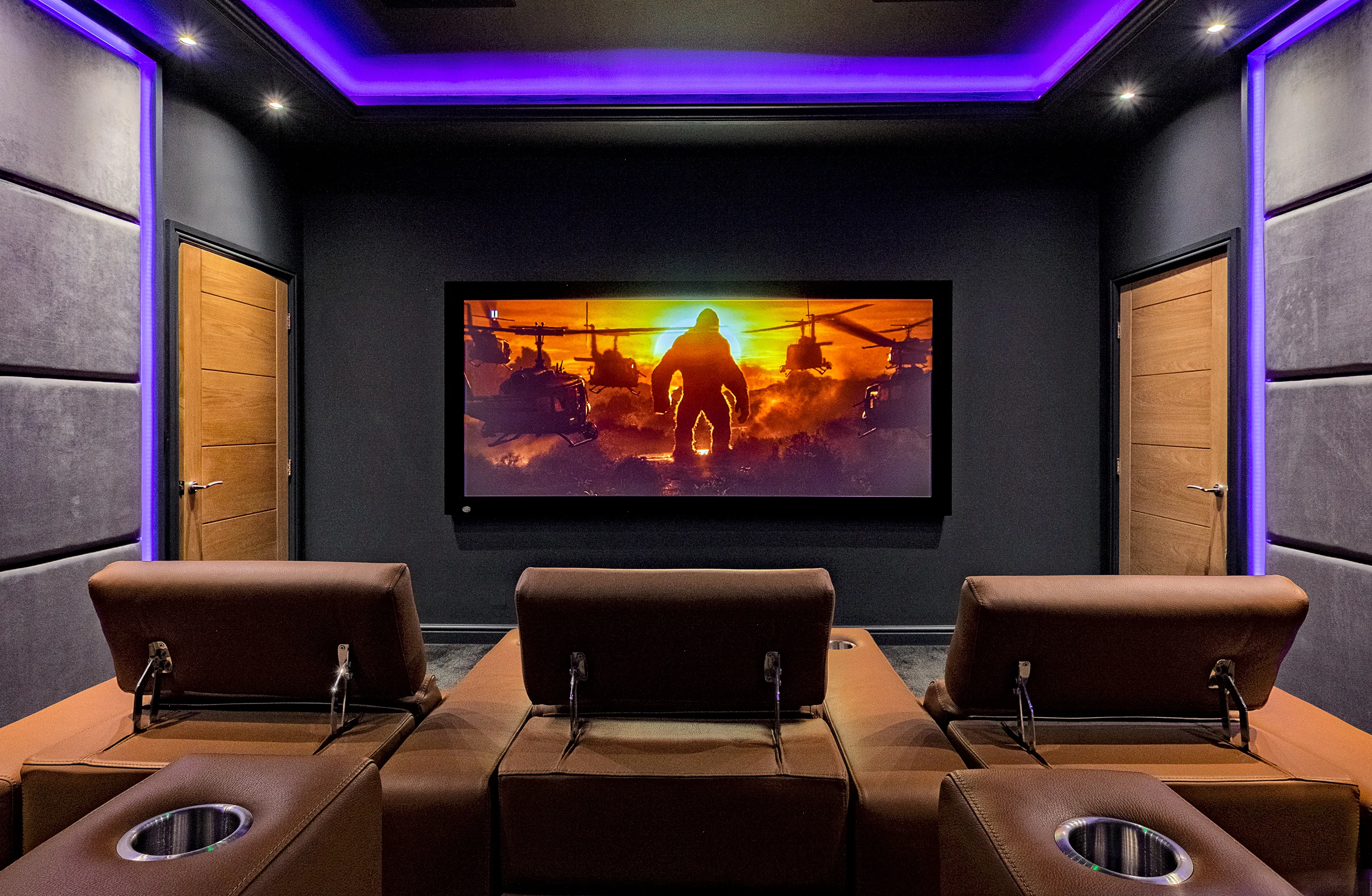 Home cinema · 6 min read
Creating a home cinema room: 2 things to consider
A well designed home cinema can transform how you enjoy your home. It is less about the kit on show and more about what the room does to you when the lights drop and the film starts.
Read article → Home cinema · 3 min read
A loft cinema room: the perfect space
Creating a loft cinema room is one of the most exciting room conversions you can undertake! Acoustic Pixel love to transform previously under used rooms into stunning entertainment spaces for you and your family! Loft home cinema room conversions are among our favourite projects!
Read article →
Start it right.
Whether you're building, renovating or improving what you've got, we'll design the whole thing first so you can build it at your own pace without painting yourself into a corner.