
Smart home retrofit: when to rescue, and when to start fresh.
Most smart homes that don't behave as promised can be saved. The faults are rarely the devices, they're the network or the programming underneath. Here's how to tell whether your system needs rescuing or replacing, and what each involves.
First, the honest part.
A smart home that drops connections, fires scenes at the wrong time or needs three apps to run isn't usually a technology failure. It's a failure of integration or system design. That's good news, because design problems are fixable in place far more often than people expect.
We've taken on systems where the original installer had walked away. Most came back to life with a network rebuild and a programming pass, not a rip-out.
Three situations we see most.
Devices that won't work together. A Hive thermostat, Hue bulbs, Ring cameras, Sonos speakers, each doing its job, none acting as one. The fix is usually a professional platform that pulls the good devices into a single system and replaces only what it has to.
A system that misbehaves. Inconsistent scenes, dropped connections, automations at the wrong time. These almost always trace back to networking or programming. Both are fixable, and neither is obvious from the outside.
An older system to bring forward. A Control4 install from a decade ago, or an older Crestron, RTI or KNX system. Most can be extended, modernised or migrated in place. We'll tell you honestly when extension is the wrong answer.
When starting fresh is the right call.
Replacement makes sense in two cases: the platform is genuinely obsolete and no longer supported, or the original install was so poorly designed that fixing it costs more than starting again. Everything else is usually a rescue.
The way to know is a diagnostic visit. We find the actual cause, not the symptom, and give you a straight answer on what's worth saving, quoted separately and credited against the project if you go ahead.
Quick answers.
- Can you fix a smart home another installer set up?
- Often, yes. Most smart home faults, inconsistent scenes, dropped connections, automations firing at the wrong time, trace back to networking or programming rather than the devices themselves. We start with a diagnostic visit, find the actual cause, and tell you honestly what's worth saving. We've taken on systems the original installer had given up on.
- Is it cheaper to retrofit or start fresh?
- Usually retrofit. Much of an existing system, the cabling, many devices and often the platform, can be brought forward in place. Starting fresh only makes sense when the platform is genuinely obsolete or the original install was so poorly designed that fixing it costs more than replacing it. A diagnostic visit tells you which you're looking at.
- Do I need to replace all my smart devices?
- No. We identify which of your existing devices integrate cleanly into a professional platform, which are worth replacing, and which work best left alone. The goal is one coherent system, not a forced rip-out.
Similar articles.
- Smart home · 7 min read
How much does a Control4 system cost?
The controller is the cheap part. Real numbers for one room up to a whole house, and what moves them.
Read article → - Smart home · 7 min read
Control4 vs Loxone vs Crestron.
What each platform is genuinely good at, what it costs, and which suits which home. No marketing.
Read article → - Smart home · 6 min read
Smart home installation cost: what you're really paying for.
The honest bands for lighting, heating, a starter system and whole-home, and where the money actually goes.
Read article → - Smart home · 6 min read
How to build a smart home.
The right order to do it in: network first, one platform, start with lighting, design for expansion.
Read article → 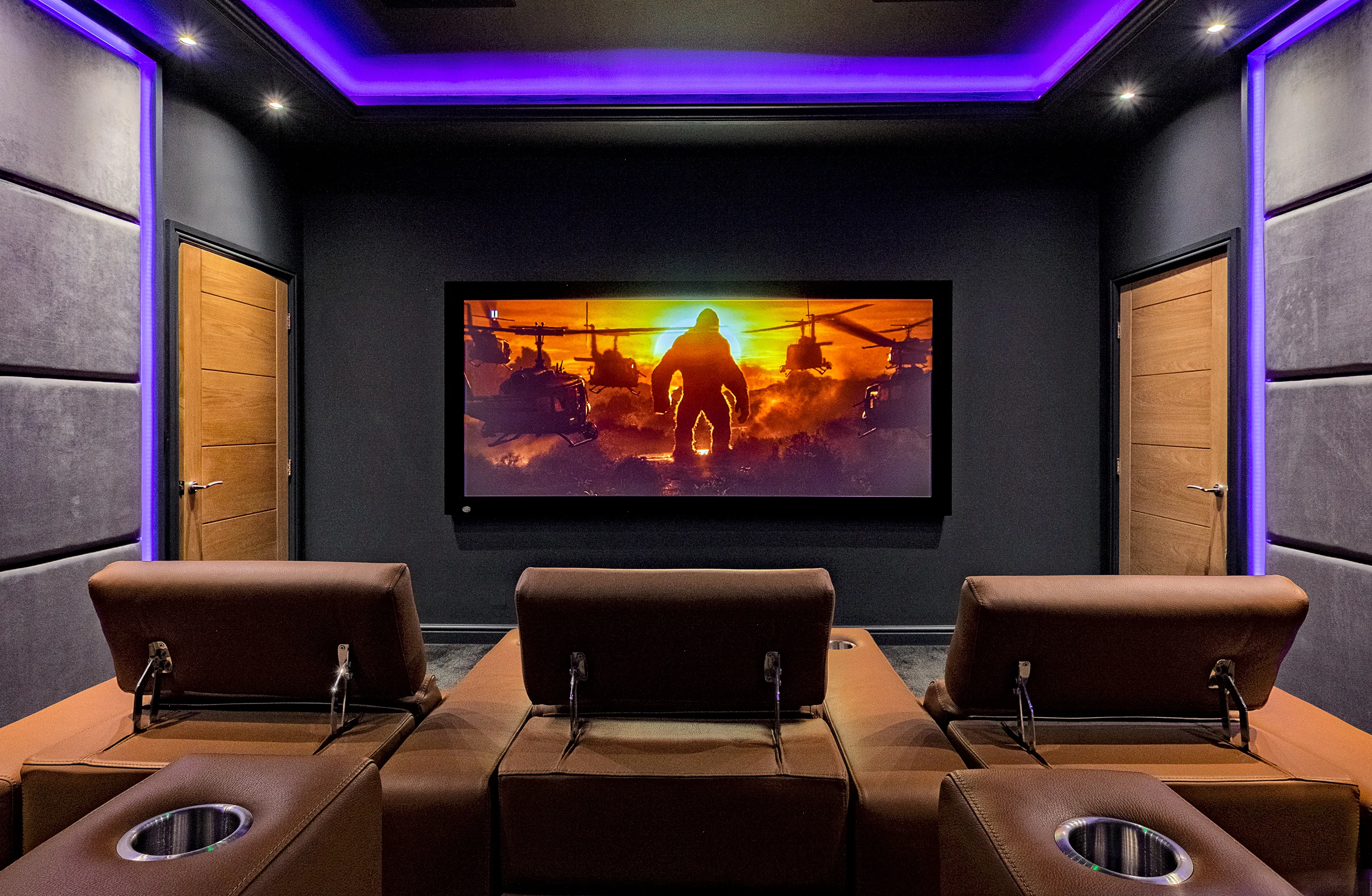 Home cinema · 6 min read
Creating a home cinema room: 2 things to consider
A well designed home cinema can transform how you enjoy your home. It is less about the kit on show and more about what the room does to you when the lights drop and the film starts.
Read article → Home cinema · 3 min read
A loft cinema room: the perfect space
Creating a loft cinema room is one of the most exciting room conversions you can undertake! Acoustic Pixel love to transform previously under used rooms into stunning entertainment spaces for you and your family! Loft home cinema room conversions are among our favourite projects!
Read article →
Book a diagnostic.
If your smart home isn't behaving, the fastest route to a straight answer is a diagnostic visit. We'll tell you what's wrong and what it takes to put right.