
How to build a home cinema room: a step-by-step guide [2026]
Turning planning into a cinema that actually works - nine decisions, in the order that keeps compromises out of the room.
By Pratik Patil, Acoustic Pixel, Middlesbrough · 29 September 2026
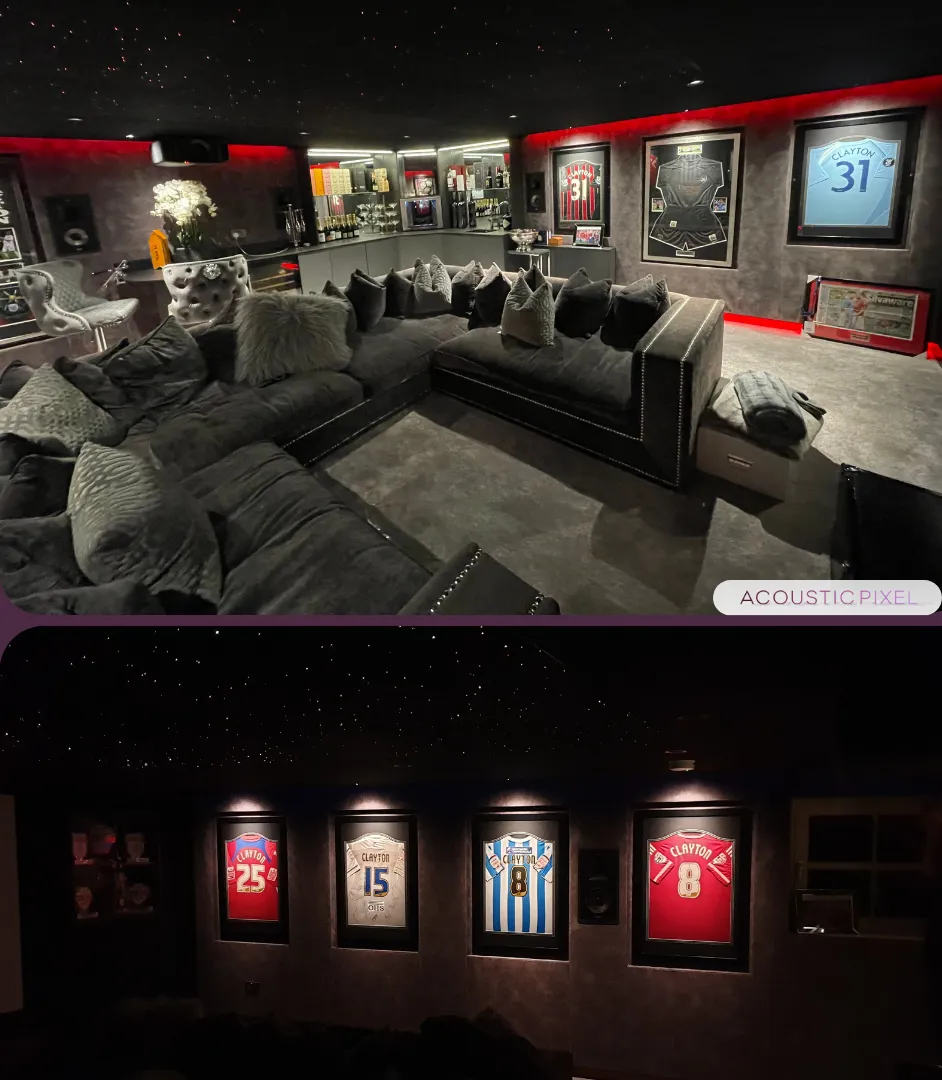
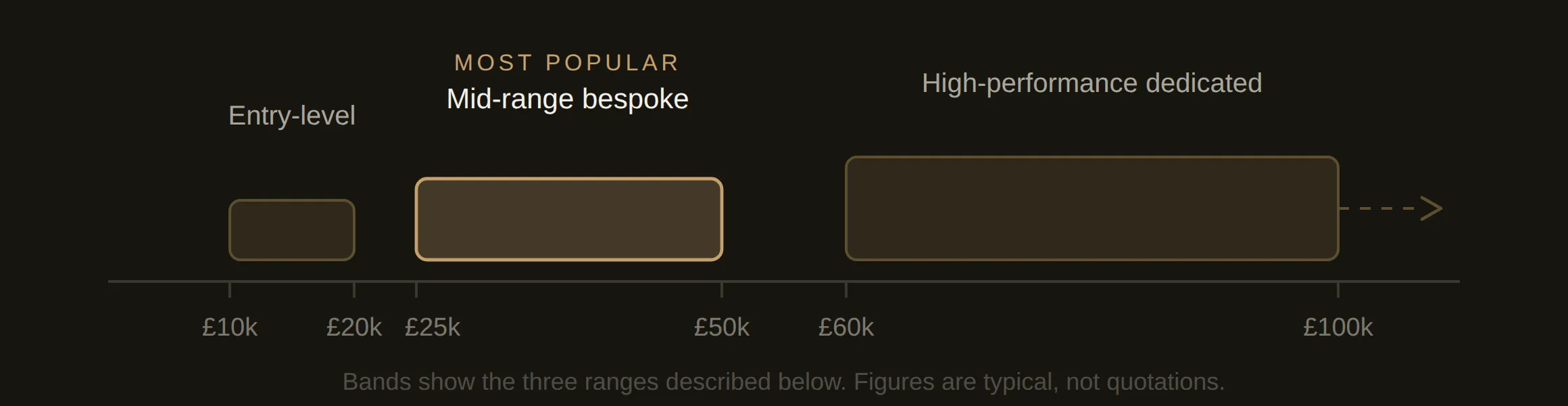
Turning planning into a cinema that actually works
Building a home cinema doesn’t start with choosing a projector or speakers.
It starts with understanding your space, your lifestyle, and how all the elements work together. When decisions are made out of sequence, compromises creep in quickly and fixing them later is expensive.
If you’ve already read Building a Home Cinema Room: Planning, Costs & Common Mistakes (2026), this guide picks up from there. It focuses on how to move from understanding the principles to making practical decisions, in the right order.
This is the same structure we use in our Home Cinema Cost Calculator.
The idea is simple: clarity first, commitment later.
Step 1: Choose the right room size
Room size shapes everything: sound, screen scale, seating, and budget efficiency. Most home cinema rooms fall into these categories:
Category | Dimensions | Area | Ideal for |
|---|---|---|---|
Small | 3.6 × 3m | 11 sqm | 2-4 viewers |
Medium | 4.8 × 3.6m | 17 sqm | 4-6 viewers |
Large | 6 × 4.5m | 27 sqm | 6-8 viewers |
Extra large | 7.5 × 5.5m | 41 sqm | 8-12 viewers |
Custom | 9m+ × 6m+ | 55+ sqm | Dedicated cinema rooms |
Smaller rooms are often underestimated. When designed properly, they’re easier to control acoustically and can feel more immersive than larger, open spaces.
This is why room size is always the first input in the calculator. Everything else depends on it.
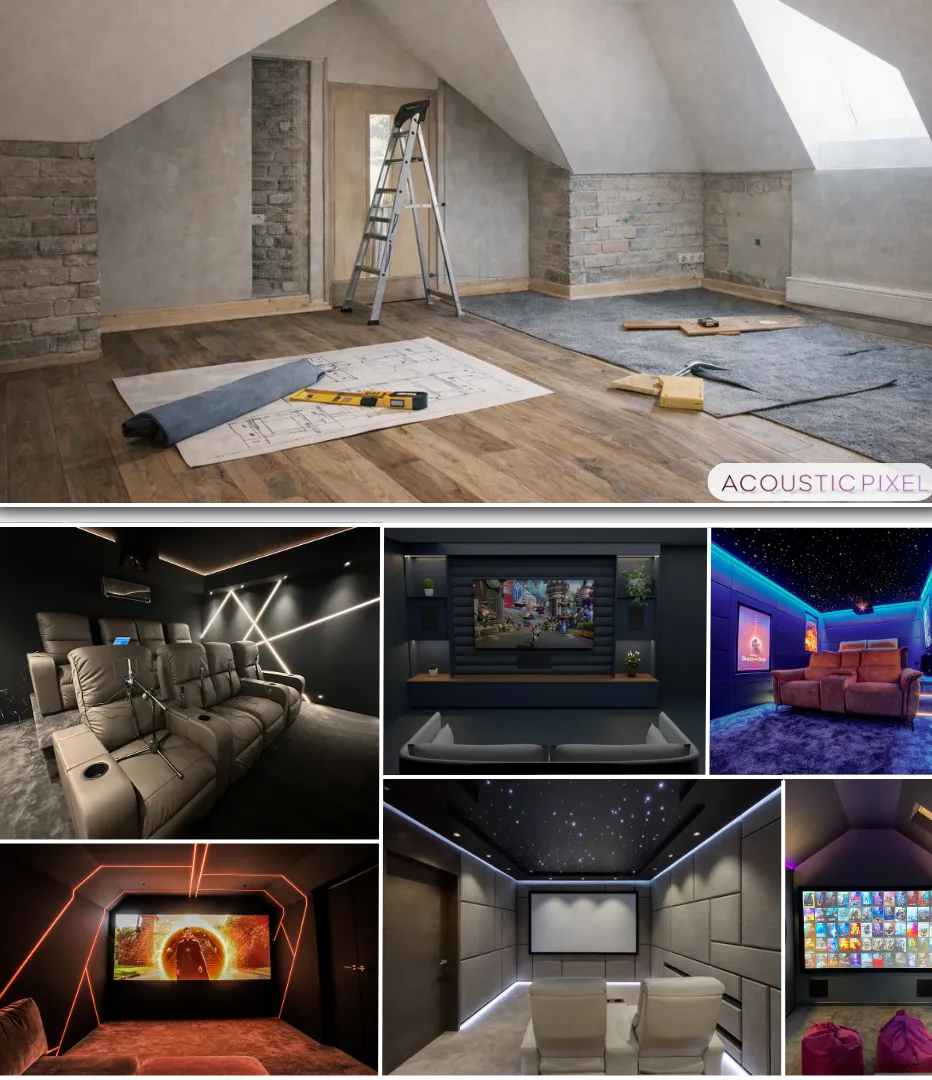
Step 2: Audio - the heart of the experience
Sound is what gives a cinema its emotional weight. Most systems fall into one of these routes:
-
Soundbar and subwoofer - compact, clean upgrades
-
5.1 surround sound - classic cinema-style immersion
-
7.1 surround sound - enhanced depth and movement
-
Dolby Atmos - fully immersive, three-dimensional sound
What changes cost and complexity isn’t just the system type, but room size, the number of speakers, and amplification and processing quality.
This is also where acoustic treatment becomes essential, even if it’s not the most exciting line item. Without it, performance suffers regardless of how good the equipment is.
Our calculator accounts for this early, so it doesn’t get overlooked.
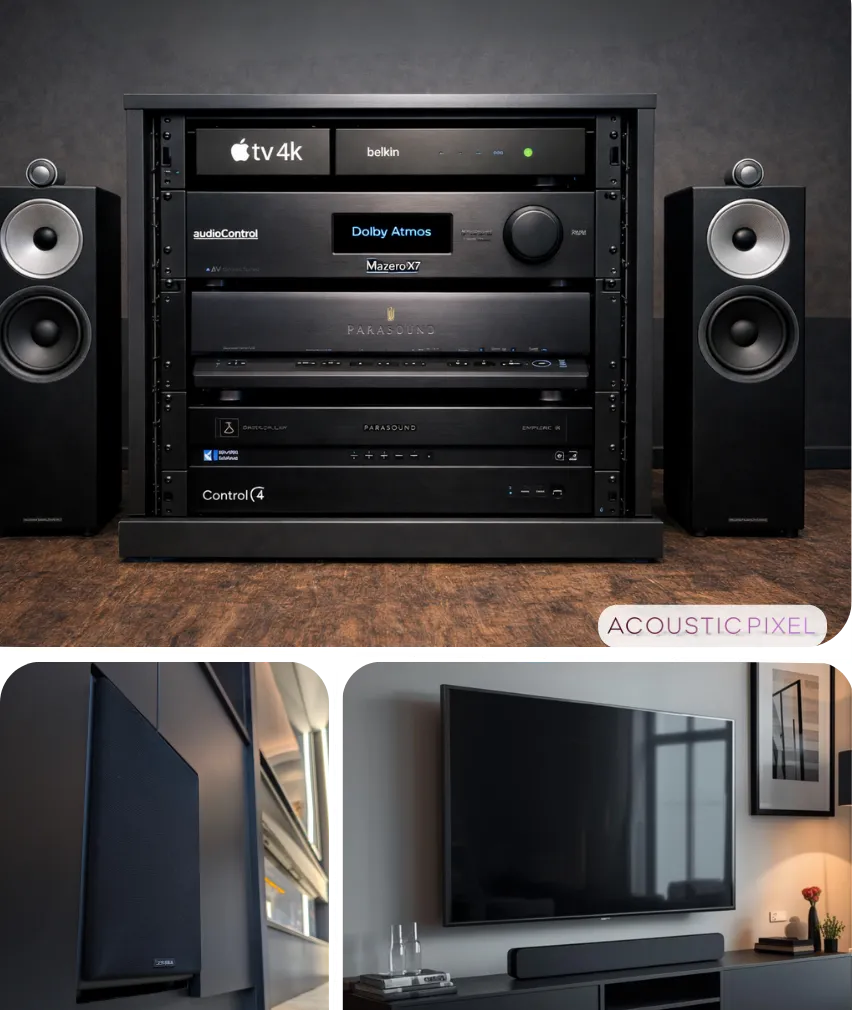
Step 3: Video - screen or projection?
The display is the visual anchor of the room. Most people narrow this down to:
-
Large 4K TVs, 75-85” - bright, sharp, and simple
-
Very large TVs, 98-100” - statement displays for modern spaces
-
Ultra-short-throw laser TVs - projector-scale images with minimal intrusion
-
4K laser projectors - the most cinematic option
Each option works brilliantly in the right context and poorly in the wrong one. Viewing distance and light control matter more than headline size.
Rather than asking “what’s the biggest screen?”, it’s more useful to ask “what fits this room properly?”. That’s exactly how the calculator frames this choice.
Step 4: Lighting - control, not brightness
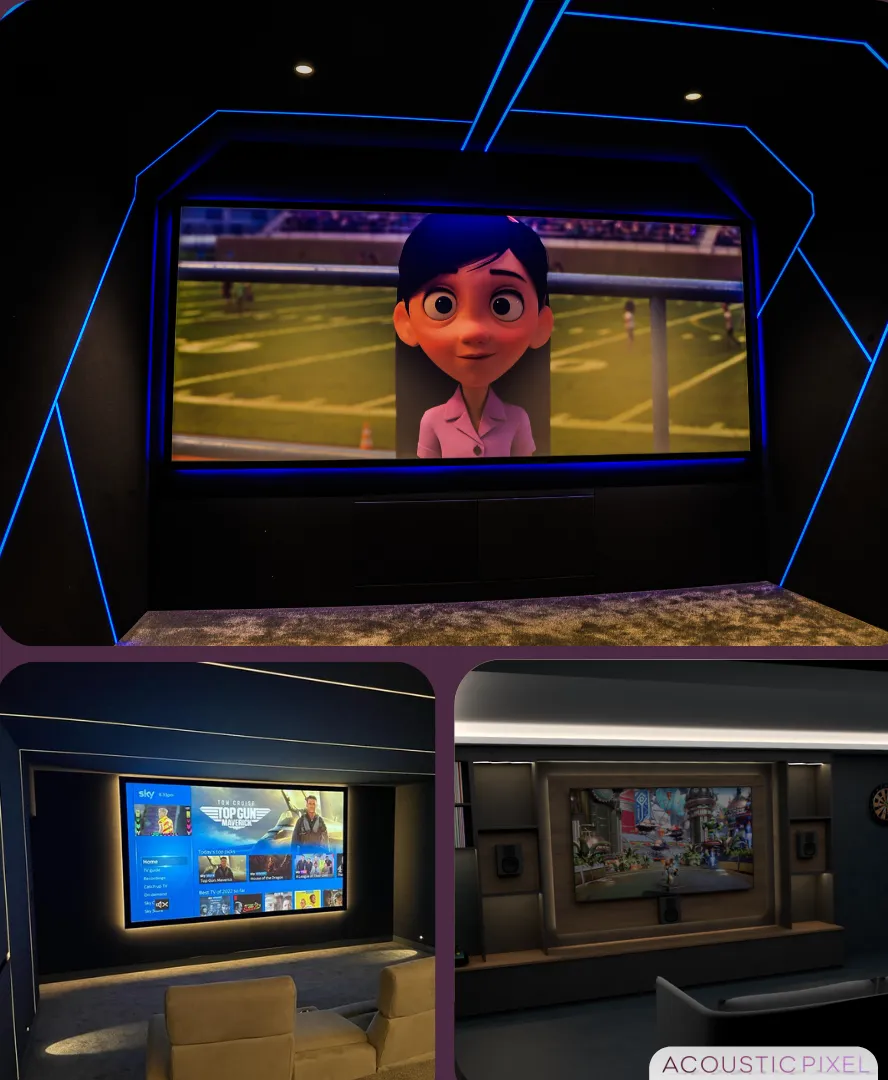
Lighting defines how cinematic the room feels. Cinema lighting typically includes:
-
Smart control of existing lights - automated dimming and scenes
-
Subtle bias lighting behind the screen - reduces eye fatigue
-
Full ambient and perimeter lighting - complete atmosphere control
The goal isn’t darkness, it’s behaviour. How the room transitions when a film starts matters more than raw brightness levels.
Because lighting interacts with the screen and acoustics, it’s positioned after those decisions, not before.
Step 5: Starlight ceiling - the cinema magic
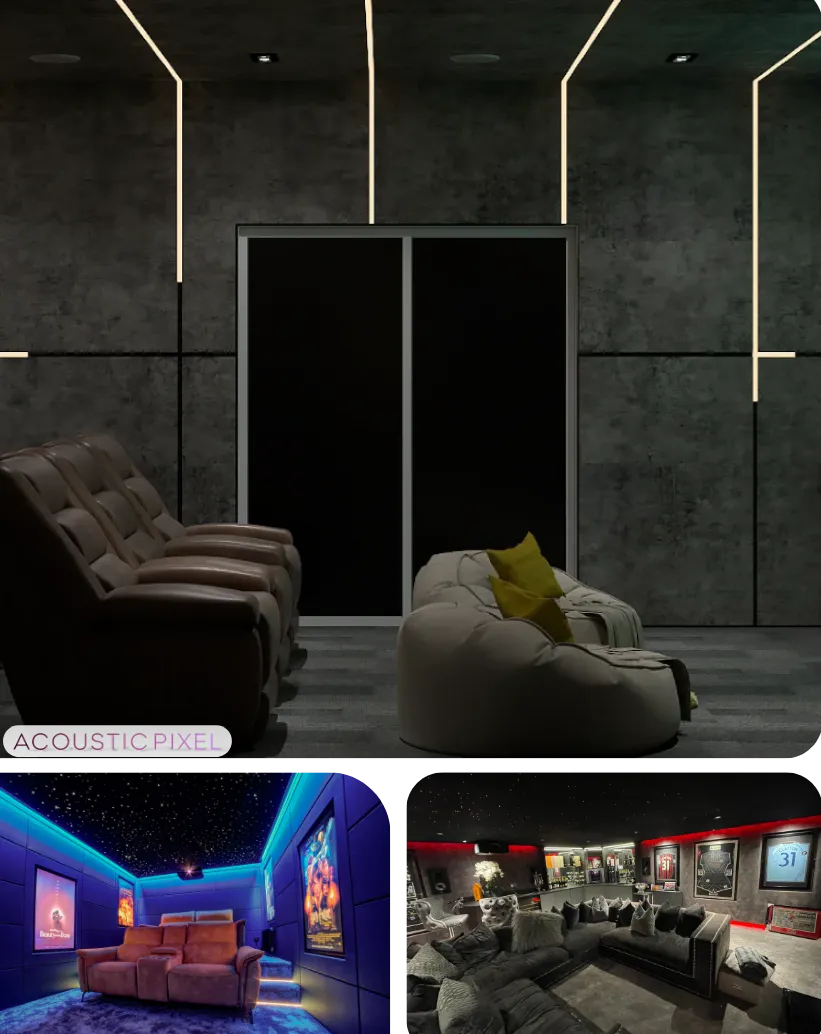
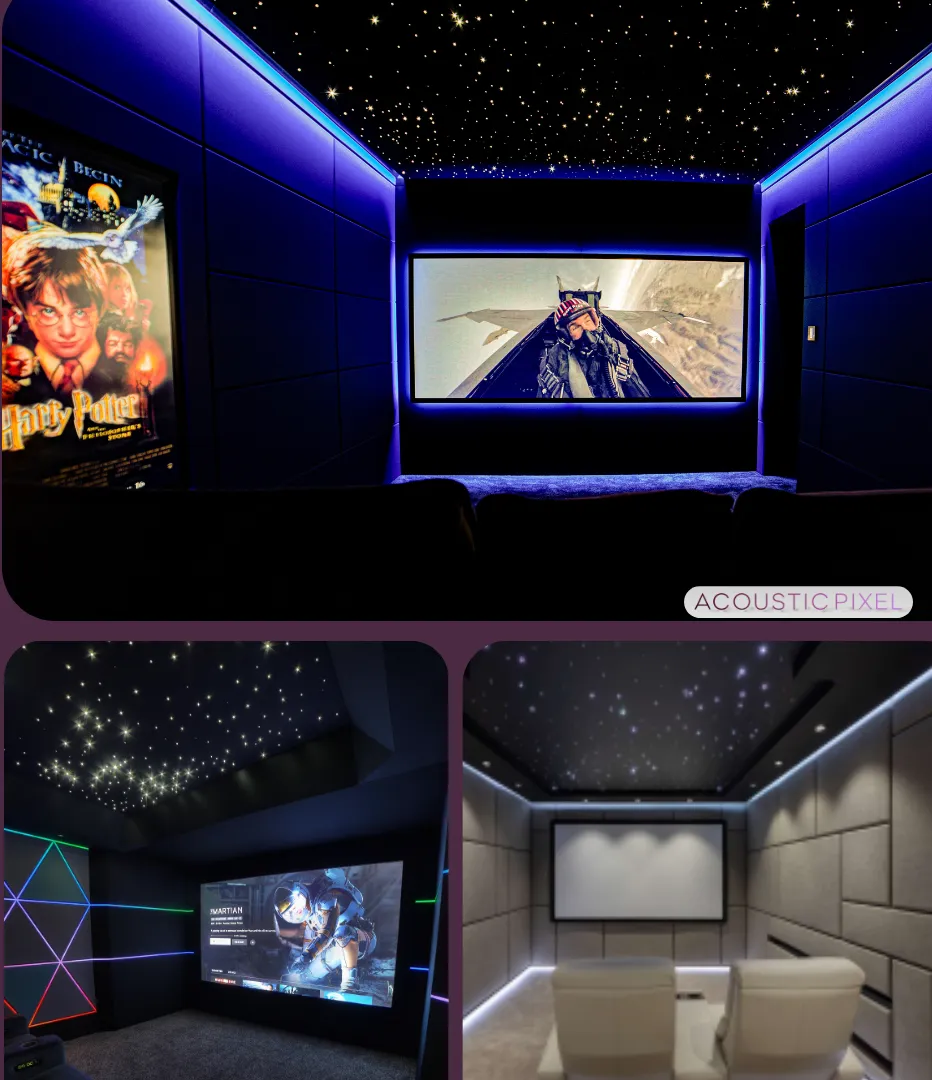
Some cinemas are multi-purpose spaces. Others are designed purely for escapism. Features like starlight ceilings fall into this category. They’re not essential, but they do change how a room feels and how often it’s used as a dedicated retreat.
-
Night-sky effect - thousands of twinkling fibre-optic stars
-
Enhanced atmosphere - creates a clear “wow” moment
-
Destination room - creates something truly special
These are optional layers, and they’re treated that way in the planning process.
Step 6: Control - one touch, not five remotes
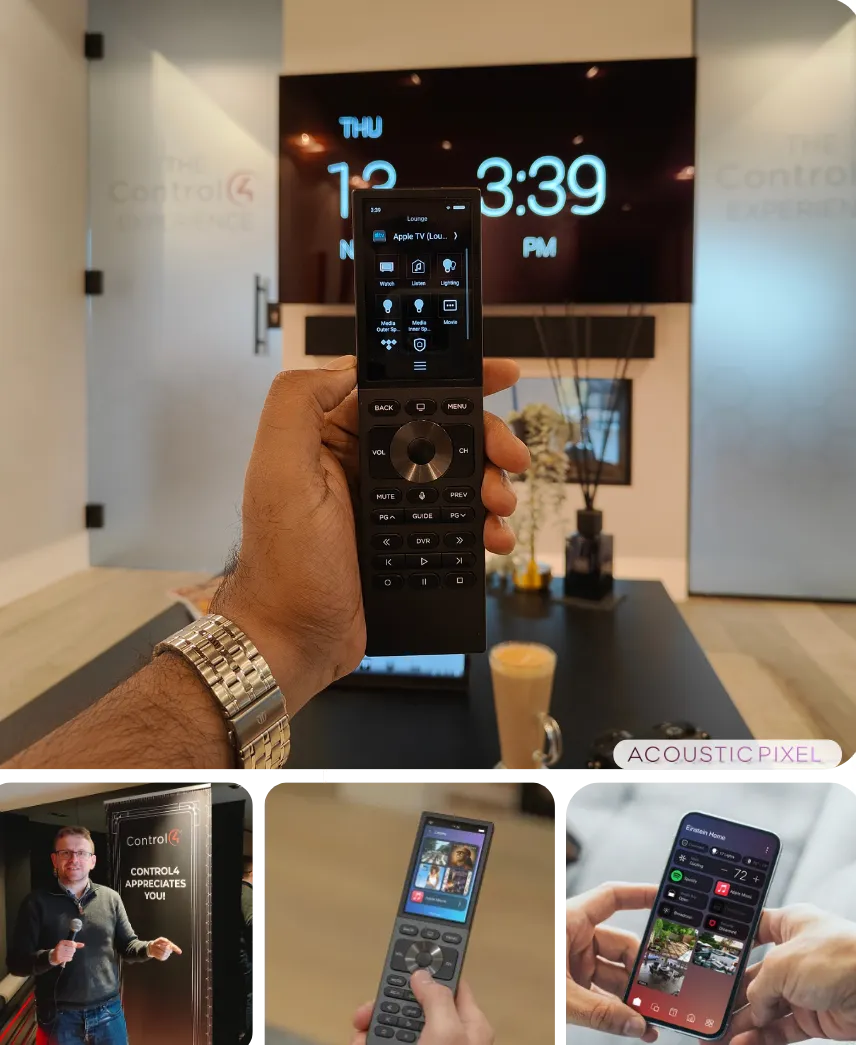
A cinema should feel effortless. Integrated control platforms such as Control4 allow:
Movie Night, Lighting adjusts, Audio adjusts, Film, gaming or TV.
-
One-touch “Movie Night” scenes - everything adjusts automatically
-
Automatic lighting and audio changes - seamless transitions
-
Easy switching between films, gaming and TV - one system
This step isn’t about choosing gadgets. It’s about deciding how frictionless you want the experience to be once everything is installed.
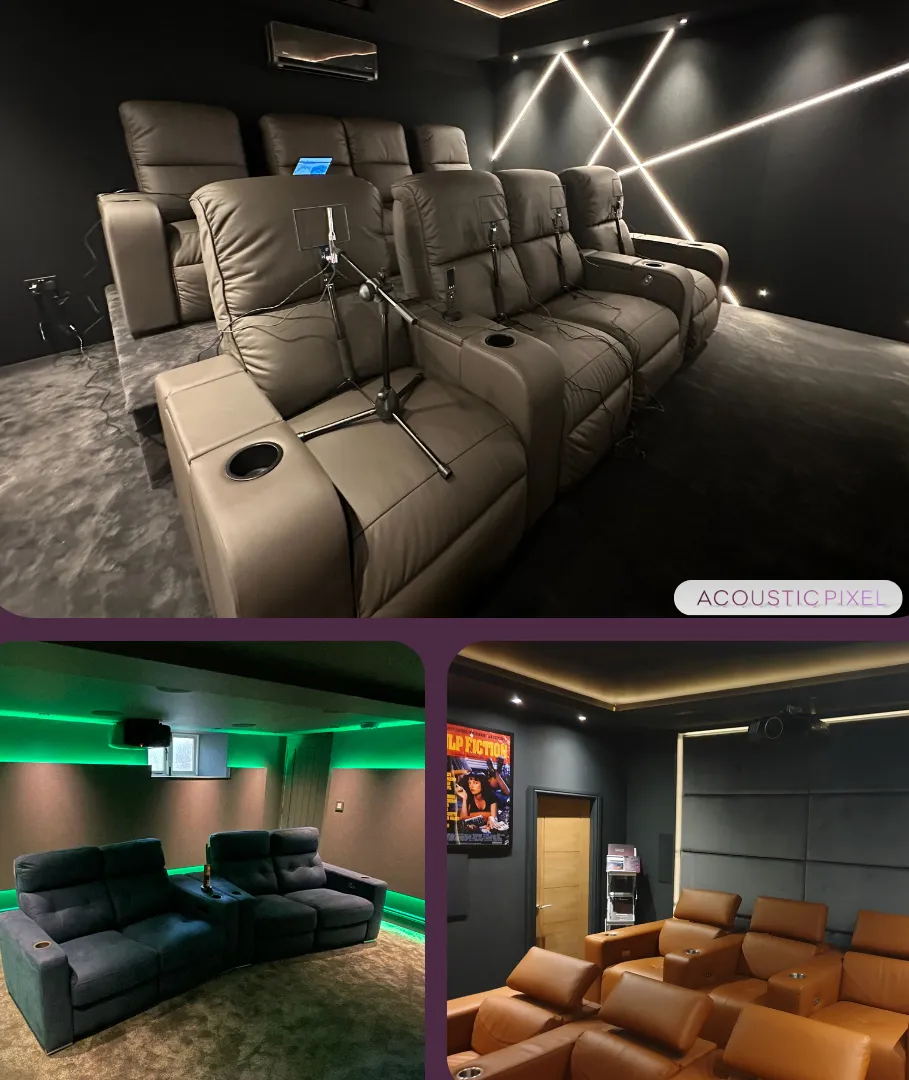
Step 7: Seating - comfort before capacity
Seating choices include:
-
Cinema sofas - traditional comfort for family spaces
-
Individual recliners - personalised comfort per seat
-
Theatre-style seating rows - authentic cinema experience
-
Bespoke seating designs - custom solutions for your space
What matters most is comfort and viewing position, not squeezing in the maximum number of seats. Poor seating decisions are hard to fix later, which is why they’re planned alongside viewing distance.
Step 8: Acoustic treatment - the quiet enabler
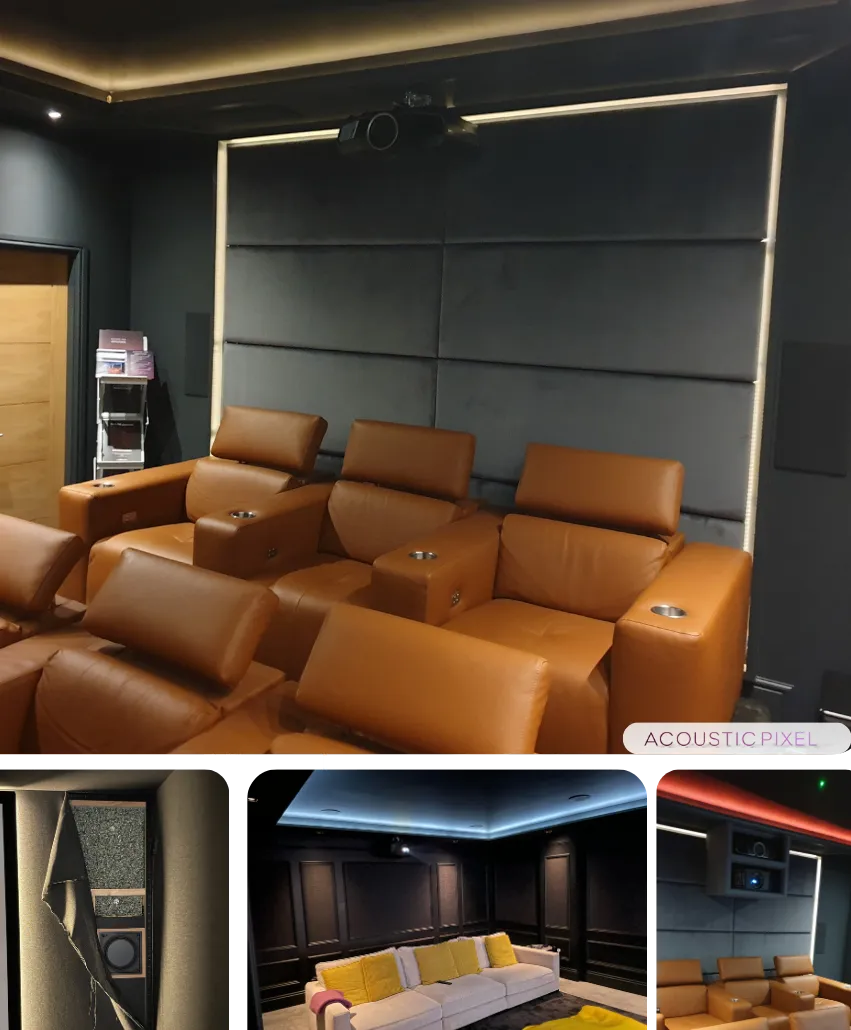
Acoustic treatment is often overlooked, but it underpins everything. It ensures:
-
Improved dialogue clarity - every word comes through crisp
-
Controlled bass response - eliminates booming or weak lows
-
Reduced echo and harshness - balanced, pleasant sound field
By accounting for it early, you avoid the common mistake of investing heavily in equipment that can’t perform properly in the room.
Step 9: Bringing the room together
Only once the core decisions are clear does it make sense to focus on:
-
Media walls
-
Fabric wall systems
-
Bespoke joinery
-
Equipment housing and ventilation
At this stage, the room stops feeling like a collection of components and starts to feel intentional.
Why we created the Home Cinema Cost Calculator
At this point, most people hit the same problem. They understand what they want. They understand the pieces involved. What they don’t have is a clear sense of cost, trade-offs, or where sensible boundaries actually sit.
Home cinema pricing is rarely transparent, and that uncertainty makes early conversations difficult. It’s hard to plan confidently when you don’t know whether you’re thinking in the right range, or how one decision affects another. Too often, people only discover this after they’ve already committed to something.
Use the Home Cinema Cost Calculator to see what your choices add up to.
Final thought
A great home cinema isn’t built by guessing or chasing trends.
It’s built by understanding the process, making decisions in the right order, and having clarity before commitment. Use this guide to frame your thinking. Use the calculator to explore options on your terms. And when you’re ready, we’ll help turn that clarity into a cinema that genuinely fits your home and lifestyle.
Pratik Patil
Acoustic Pixel, Middlesbrough
Pratik works at Acoustic Pixel, the AV and smart home integration company behind the projects on this site. He writes about home cinema, multi-room audio and smart home design, from first plans through to finished rooms.
Similar articles.
- Home cinema · 8 min read
Home cinema installation cost: an honest breakdown of UK pricing in 2026.
What each band actually buys, component by component, and where the money genuinely matters.
Read article → - Home cinema · 6 min read
How to choose a home cinema installer.
What a good one does differently, the red flags to walk away from, and the questions worth asking first.
Read article → - Smart home · 7 min read
How much does a Control4 system cost?
The controller is the cheap part. Real numbers for one room up to a whole house, and what moves them.
Read article → - Smart home · 6 min read
Smart home retrofit: when to rescue, and when to start fresh.
Most flaky systems can be saved. How to tell whether yours needs rescuing or replacing.
Read article → - Media walls · 5 min read
Media wall design: the mistakes UK homeowners make most.
Oversized TVs, audio added too late, trapped heat. The four we get called in to fix, and how to avoid them.
Read article → - Networking · 5 min read
Why networking is the foundation of every smart home.
Most smart home faults are network faults. Why consumer mesh runs out of road, and what to do instead.
Read article →
Talk it through with a designer.
Price a room with the calculator, read more about home cinema, or come and hear the difference in the showroom.