
How to choose a home cinema installer.
A home cinema is one of those jobs where the difference between a good installer and a bad one isn't obvious until the room is finished and the money's gone. By then it's expensive to fix. So here's how to tell them apart before you commit, written by people who get called in to put the bad ones right.
A good one starts with your room.
Ask about your project and listen to what comes back first. If the answer is a brand and a model number, be careful. If it's a question about the room, the ceiling height, the light, where you'll actually sit and what you like to watch, you're talking to someone who knows what they're doing.
The room decides almost everything. A great installer designs from it outward. A poor one picks the kit they always fit and makes your room work around it. We've walked into £40,000 rooms that sound worse than a £12,000 one down the road, and it nearly always traces back to that first conversation.
- THX training and brands that belong in a serious build (M&K Sound, JVC, Sonance and the like)
- Finished rooms you can visit, hear, or at least see properly
- In-house engineers, not a chain of subcontractors
- Calibration included, and a report you keep
- A written design and a line-by-line quote up front
- They lead with the gear and skip the room
- Acoustic treatment and calibration don't come up
- The quote is one number and a box list
- Nobody can tell you who supports it in two years
- They want a big deposit before any design exists
Ask who picks up the phone in two years.
This is the question people forget, and it's the one that matters most once the novelty wears off. A cinema is a system you live with. Cables age, firmware updates land, a child unplugs something. You want the person who built it on the other end of the phone, not a call centre that's never seen your rack.
So ask it plainly. Who supports this afterwards? Is there a service contract? What happens if something stops working in eighteen months? The answers tell you whether you're buying a relationship or a transaction.
Quick answers.
- What should I look for in a home cinema installer?
- Someone who starts with your room and how you'll use it, not a kit list. Look for proper training (THX is the standard for cinema design), real finished projects you can go and see or hear, in-house engineers rather than subcontractors, and calibration included as standard. A written design and a line-by-line quote before any money changes hands is non-negotiable.
- How do I know if a quote is any good?
- A good quote reads like a plan, not a shopping list. It explains the room, the speaker placement, the treatment and the control, and it prices each part so you can see where the money goes. If a quote is one number with a box list underneath and no mention of acoustics or calibration, that's a tell.
- Should I use a local installer or a national company?
- Either can be excellent. What matters is whether they'll actually look after you afterwards. Ask who answers the phone in two years when a firmware update breaks something. A good local or regional installer who shows up beats a big name who subcontracts the work and disappears.
- How long should a home cinema take to install?
- A living-room upgrade is a few days. A dedicated mid-range room is usually three to six weeks of on-site work after the design is signed off. A fully engineered high-performance room can run eight to sixteen weeks. Anyone promising a reference cinema in a long weekend is telling you something useful about the result.
Similar articles.
 Home cinema · 6 min read
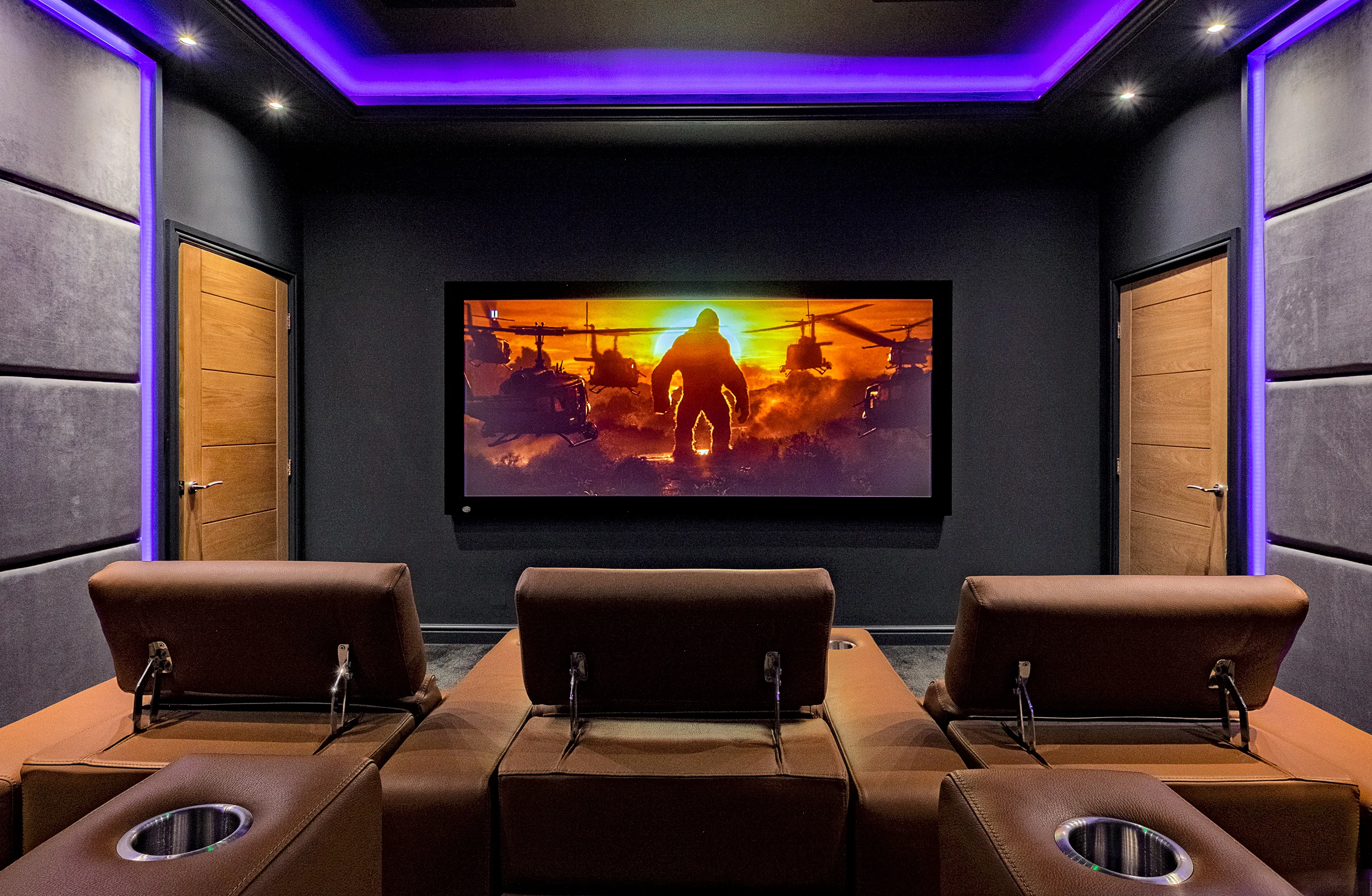
Creating a home cinema room: 2 things to consider
A well designed home cinema can transform how you enjoy your home. It is less about the kit on show and more about what the room does to you when the lights drop and the film starts.
Read article → Home cinema · 3 min read
A loft cinema room: the perfect space
Creating a loft cinema room is one of the most exciting room conversions you can undertake! Acoustic Pixel love to transform previously under used rooms into stunning entertainment spaces for you and your family! Loft home cinema room conversions are among our favourite projects!
Read article →- Home cinema · 8 min read
Home cinema installation cost: an honest breakdown of UK pricing in 2026.
What each band actually buys, component by component, and where the money genuinely matters.
Read article → - Smart home · 7 min read
How much does a Control4 system cost?
The controller is the cheap part. Real numbers for one room up to a whole house, and what moves them.
Read article → - Smart home · 6 min read
Smart home retrofit: when to rescue, and when to start fresh.
Most flaky systems can be saved. How to tell whether yours needs rescuing or replacing.
Read article → - Media walls · 5 min read
Media wall design: the mistakes UK homeowners make most.
Oversized TVs, audio added too late, trapped heat. The four we get called in to fix, and how to avoid them.
Read article →
Put us to the test.
Come and sit in a finished room before you decide anything. Bring the questions above. If we can't answer them well, you've lost an afternoon. If we can, you've found your installer.