
Home cinema installation: what happens, stage by stage
A home cinema installation runs in six stages: survey, design, first fix, the room build, second fix and calibration. Here is what happens at each one, which trades are involved and what you need to decide before anyone arrives.
By Stephen, Director · 18 November 2026
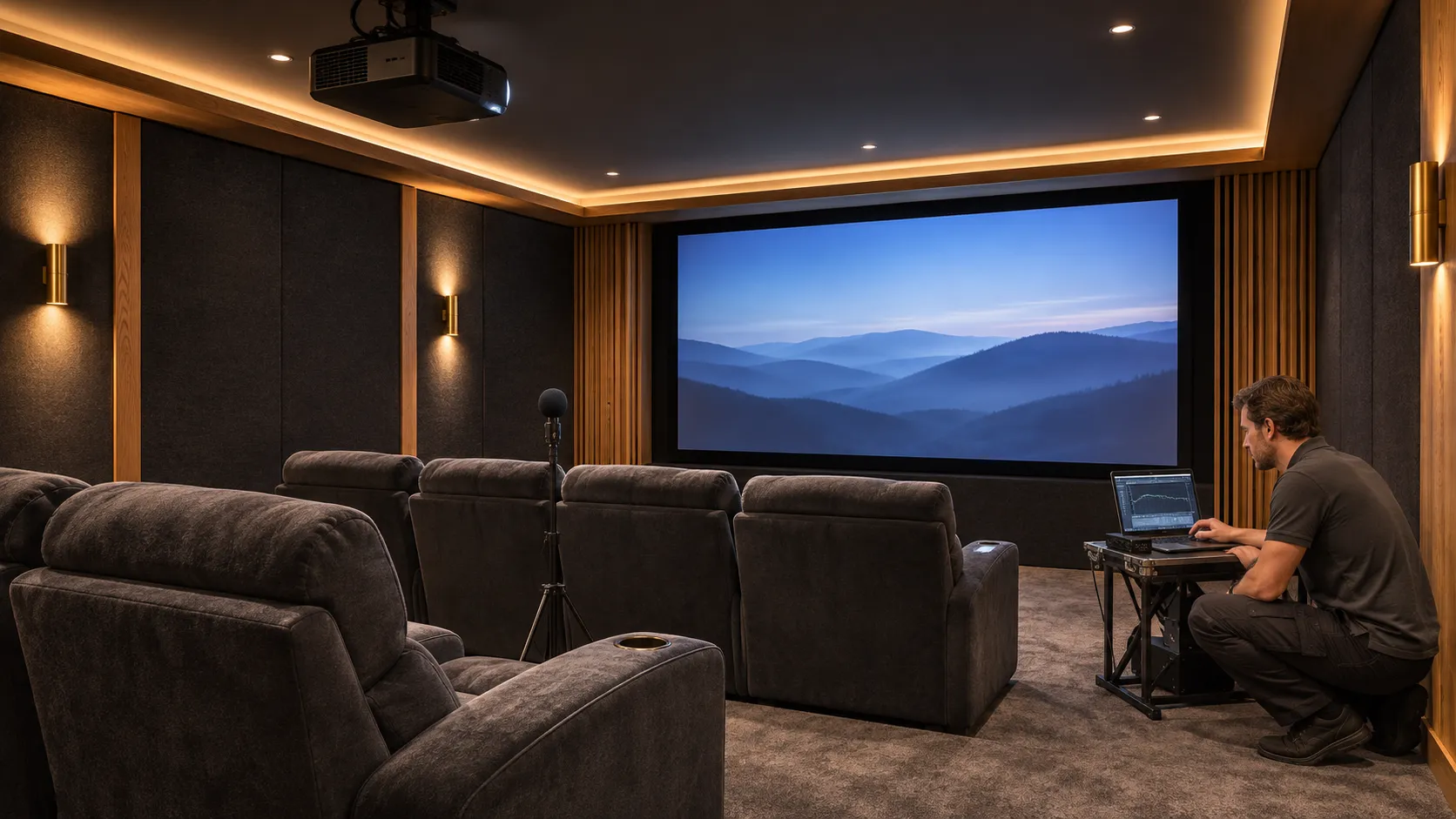
The first time you experience a home cinema in your home is magical! It evokes powerful emotions when you see and experience a professionally built cinema room. But how do we get to that stage - let’s explore!
A home cinema installation runs in six stages: a survey of the room, a written design, first fix cabling, the room build, second fix (fitting and connecting the equipment) and calibration at the very end. The order matters more than the kit. Cables have to be in the walls before the plasterer arrives, the seating position has to be fixed before the speakers are placed, and calibration only works once everything else is finished. This guide walks through each stage, who is involved and what you need to decide first.
What to decide before the installer arrives
Three decisions shape almost everything else. You do not need final answers before an initial survey visit, and a good designer will help you reach them, but it helps if you have an opinion!
Who watches, and where they sit. How many seats, and whether you want one row or two (or more!). The main seating position is the reference point for the screen size, the speaker positions and the calibration, so it gets fixed early.
Screen or TV, and roughly how big. A large TV, a projector and screen, or an ultra-short-throw projector. The right size follows from how far you sit from it, not the other way round.
How many speakers. A 5.1 or 7.1 system, or Dolby Atmos with speakers in the ceiling. Atmos needs enough ceiling height and more cabling, so to do it properly it has to be decided before first fix, not after.
Plenty of good ‘cinema systems’ live in a living room, a converted spare bedroom or a garage. Not every cinema needs Atmos, a starlight ceiling or bespoke seating either. Our home cinema page sets out what each level of project typically includes.
The six stages at a glance
Stage | What happens | Room empty? | Who is involved |
|---|---|---|---|
1. Survey | Measure the room, look at structure, light and existing wiring | No | Cinema designer |
2. Design | Speaker, screen and seating layout, treatment, specification, quote | No | Cinema designer, your architect if you have one |
3. First fix | Cables and back boxes into open walls and ceilings. For rooms with a fabric wall build out, we get to keep disruption to a minimum! | Yes | AV engineers, electrician |
4. Room build | Fabric walls, ceiling, joinery, plastering, acoustic treatment, decoration | Yes | Joiner, fabric wall installer, plasterer, electrician, decorator |
5. Second fix | Speakers, screen, projector, rack, seating and control fitted | Yes, until seating arrives | AV engineers |
6. Calibration | Measure and adjust the finished room, then hand over | Furnished, as it will be used | AV Engineer |
Stage 1: the survey
A visit to the room. We measure the dimensions and ceiling height, and look at the structure, the windows and daylight, the rooms either side (where sound will travel), and what power and cabling is already there. We will scan the room to create a 3D model - the tape measure does less work these days!
We also ask what you actually watch, who uses the room and when. The room dictates nearly every later decision, so this conversation matters more than any brochure.
Stage 2: design and quote
A document covering speaker positions, screen size and geometry, the seating layout, acoustic treatment, lighting, ventilation for the equipment and a full specification. This is where the seating position is fixed, because everything else is measured from it. Moving the main seating position, after the speakers are installed, can significantly impact how you will experience the room.
The design comes with a line by line quote, so you can see what each part costs and which decisions are still open. On an architect-led project the design is formatted to the RIBA stages so it drops straight into the drawings.
Stage 3: first fix
First fix is everything that goes inside the walls and ceiling before they are closed up: speaker cable, the video link to the projector, network, power for the equipment rack and screen, and the lighting circuits. It has to happen before plastering. Once a wall is skimmed, adding a cable means chasing it out and making good, which costs more and rarely looks as tidy.
Pro Tip: A lot of our cinema room projects are built in existing rooms, utilising fabric wall systems. This means that first fix is much easier as cables don’t need to be chased through walls! And the finish look is incredible!
On a new build or major renovation, our first fix runs alongside the electrician, typically once the stud walls and ceiling joists are up and before the plasterboard goes on. We coordinate with your main contractor so the cinema cabling fits their programme. That date is the one to protect: tell us about your build early, even if the cinema itself is a year away. In an existing room, first fix can mean lifting floorboards, working through ceiling voids or planning neat routes around what is already there.
Stage 4: building the room
This is where the room itself takes shape. Depending on the design it may mean new stud walls or a false ceiling, sometimes with acoustic isolation from the rest of the house; plastering and making good; joinery such as a step for a second row, a media wall or equipment cabinetry; acoustic treatment on walls and ceiling; a starlight ceiling if you have chosen one; and decoration.
Several trades are on site at this stage: joiner, plasterer, electrician and decorator. On some projects your builder handles the structural work and we handle the AV and treatment. On others we manage the room end to end. The design makes clear who does what, and building works are only in our price if the quote says so.
Pro Tip: Remember that we can install a fabric wall system for the ultimate cinema look. And it gives you more scope to install cables at a later date.
Stage 5: second fix
With the room finished and the dust gone, the equipment goes in. Speakers are mounted, the screen and projector are fitted and aligned, the equipment rack is built and dressed, the seating is delivered and positioned, and the lighting and control system is programmed. Scene programming happens here too, so one button dims the lights, lowers the screen and starts the film.
Seating is worth thinking about well before it is ordered because recline clearance behind each seat both affect the layout. Our cinema seating guide covers what to consider. It is also important to consider lead times - they can be in excess of 10-14 weeks.
Pro Tip: On projects that have fabric walls, the second fix stage (ort part of it) can come before the room build out - so all equipment is hidden away for the cleanest of finishes!
Stage 6: calibration and handover
Calibration is the last step because it measures the finished room. Seating, treatment, soft furnishings and even the carpet change how a room sounds, so measuring before they are in place would be wasted effort.
For sound, we measure at the seats, match every speaker’s level, align the timing so the sound from each speaker arrives together, and phase-align the subwoofers so the bass is even across the room rather than booming in one chair and thin in the next. Electronic room correction is applied last, to refine what the room and the placement leave behind. For picture, the projector or TV is set up for accurate colour, contrast and geometry. Our audio calibration page explains the measurements in more detail.
Most AV receivers come with an auto-setup microphone. It is a reasonable starting point, but it is not calibration. At handover we can walk you through the system, and the installation is covered by our 12-month warranty as standard.
How long it takes
It depends on the room, so treat these as typical rather than promised. A living-room upgrade of audio visual equipment would usually be a few days on site. A dedicated mid-range cinema with acoustic treatment and elements of fabric walls or joinery, typically needs three to six weeks of on-site work after the design is signed off. A fully engineered room with custom joinery and intricate fabric wall build out can run to 6 to 8 weeks. On a new build the timing follows the builder’s programme, and the date that matters most is first fix. For what each level of project costs, see our home cinema cost guide.
If you are planning a cinema, the most useful thing you can do is talk to us before the walls are closed. Come and sit in a finished room at our Middlesbrough showroom, or call us on 01642 903907, and we will talk through your room and where it fits in your build.
Quick answers.
- How long does a home cinema installation take?
- A living-room upgrade is usually a few days on site. A dedicated mid-range cinema with acoustic treatment typically needs three to six weeks of on-site work after the design is signed off, and a fully engineered room can run to 6-8 weeks. On a new build the timing follows the builder's first and second fix.
- When does the cabling for a home cinema need to go in?
- Before the walls and ceiling are plastered. In a new build or renovation, cinema first fix runs alongside the electrician's first fix, once the studwork and ceiling joists are up. Adding cables after plastering is possible but means chasing walls and making good. UNLESS you incorporate fabric walls into your cinema design - then most cables can be installed after the room has been plastered.
- Do I need a dedicated room for a home cinema?
- No. Many good cinemas are built into living rooms, spare bedrooms, garages or loft rooms. A dedicated room gives more control over light, sound and seating, but a well designed living-room system with the right screen, speakers and treatment can perform very well.
- How much does a home cinema installation cost in the UK?
- Our projects typically sit between £10,000 and £20,000 for an entry-level room, £25,000 to £50,000 for a mid-range dedicated cinema, and £60,000 to over £100,000 for a fully engineered room. These bands cover the AV system, treatment, control, installation and calibration, but not structural building work.
- Is the auto-setup on my AV receiver the same as calibration?
- No. Auto-setup is a quick automated estimate from a single microphone. Calibration measures the finished room at the seats, matches levels and timing across every speaker, aligns the subwoofers and then applies room correction.
Stephen
Director
Similar articles.
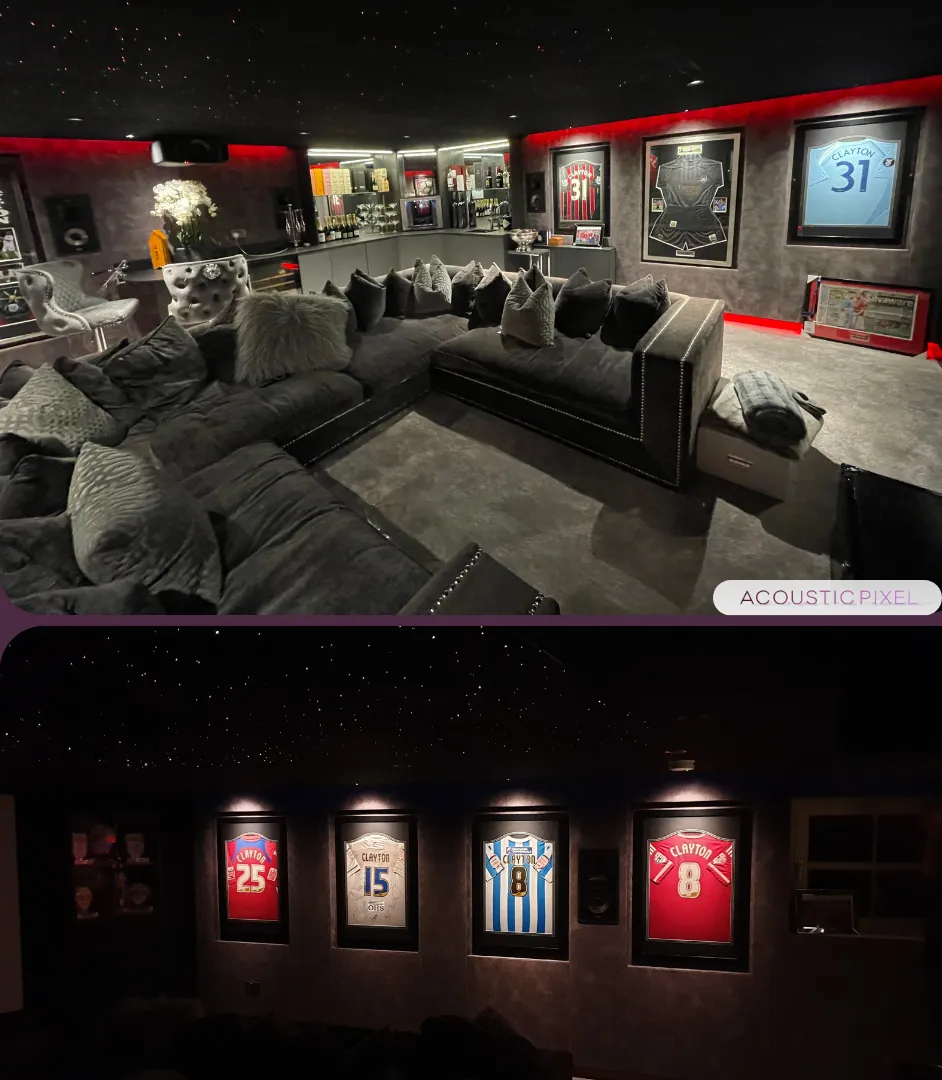 Home cinema · 5 min read
How to build a home cinema room: a step-by-step guide [2026]
Turning planning into a cinema that actually works - nine decisions, in the order that keeps compromises out of the room.
Read article →- Home cinema · 8 min read
Home cinema installation cost: an honest breakdown of UK pricing in 2026.
What each band actually buys, component by component, and where the money genuinely matters.
Read article → - Home cinema · 6 min read
How to choose a home cinema installer.
What a good one does differently, the red flags to walk away from, and the questions worth asking first.
Read article →  Multi-Room AV · 7 min read
Garden speakers: what works outdoors and what it costs
Garden speakers range from a pair of weatherproof wall speakers over a patio to a hidden system of small speakers in the borders with a buried subwoofer. Which one you need depends on the size of the space, how you use it and whether the cables can go in before the landscaping does.
Read article → Smart home · 6 min read
Smart home installation: what happens and in what order
A smart home installation is a network, a control platform and the devices in each room, designed first, cabled at first fix, fitted at second fix and then programmed around how you live. Here is what each stage involves, how it fits around a build or renovation, and what drives the cost.
Read article → Smart home · 6 min read
Automated blinds: what they cost and what to automate
Automated blinds are ordinary blinds or curtains with a quiet motor, run from a keypad, an app or a schedule, on their own or as part of a smart home. Here is what can be motorised, what moves the price, and which windows are actually worth it.
Read article →
Talk it through with a designer.
Price a room with the calculator, read more about home cinema, or come and hear the difference in the showroom.